
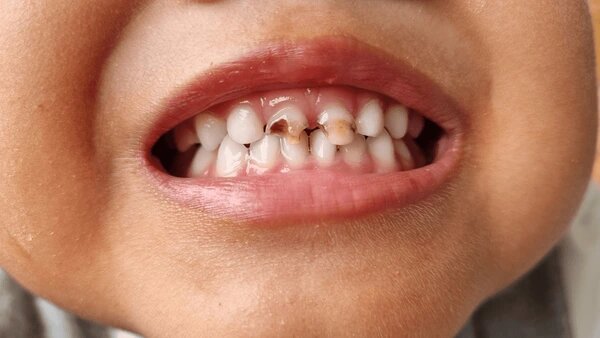
Tooth decay rarely begins with pain. In fact, most cavities start silently. You might feel perfectly fine while microscopic changes are happening on the surface of your enamel. Understanding what tooth decay is and how it is caused can help you take control before small problems turn into larger ones.proTooth decay, also known as dental caries, is a gradual process where enamel demineralisation occurs due to acid produced by plaque bacteria. These oral bacteria feed on sugars and fermentable carbohydrates in the diet. As they break these down, acids are released. Over time, repeated acid exposure leads to cavities in teeth.
How Does the Decay Process Actually Begin?
Every day, plaque bacteria form a soft film on the surface of teeth. When sugary drinks or foods are consumed, these bacteria produce acid within minutes. This begins the cycle of demineralisation and remineralisation.
Saliva plays a protective role by neutralising acids and helping restore minerals. Fluoride support also strengthens enamel, making it more resistant to acid attack. However, when sugar exposure is frequent and oral hygiene habits are inconsistent, enamel can weaken faster than it repairs.
The decay process typically follows this sequence:
- Plaque forms on teeth
- Bacteria feed on sugars
- Acid is produced
- Enamel minerals dissolve
- Repeated cycles cause cavity formation
It is not just the amount of sugar consumed that matters, but how often it is consumed. Frequent snacking increases acid exposure throughout the day.
What Are the Main Risk Factors for Dental Caries?
Certain factors increase susceptibility to dental caries:
- Frequent snacking or sipping sugary drinks
- Poor brushing and flossing habits
- Dry mouth conditions
- Deep fissure vulnerability in back teeth
- Limited fluoride exposure
- Orthodontic appliances that trap plaque
Children and adults can both develop decay, although patterns may differ. In children, fissures on molars are common sites. In adults, interproximal decay between teeth may be more prevalent.
What Are the Early Signs of Enamel Demineralisation?
Early decay often appears as white spot lesions. These chalky areas signal mineral loss but may not cause discomfort. At this stage, remineralisation with fluoride can sometimes slow progression.
As decay advances into dentine, sensitivity to cold or sweet foods may develop. Food trapping and mild discomfort can follow. If left untreated, the infection may reach the pulp, resulting in more severe pain.
How Does Decay Progress Through the Tooth?
| Stage | What Happens | Symptoms | Management Approach |
|---|---|---|---|
| Early demineralisation | Mineral loss in enamel | Usually none | Fluoride and monitoring |
| Enamel cavity | Surface breakdown | Sensitivity | Filling may be required |
| Dentine involvement | Deeper decay | Increased pain | Restoration |
| Pulp infection | Nerve affected | Severe pain | Root canal assessment |
Understanding these stages highlights why preventive dentistry is so important. Early intervention is often more conservative than waiting until pain develops.
Why Does Saliva and Fluoride Matter So Much?
Saliva protection helps neutralise acids and supply minerals such as calcium and phosphate. When saliva flow is reduced, the natural buffering effect weakens. This is why individuals with dry mouth may experience higher cavity rates.
Fluoride integrates into enamel, making it more resistant to acid dissolution. Australian public health measures, including water fluoridation, have been associated with reduced cavity rates across populations.
How Can Decay Be Prevented?
Preventive dentistry focuses on limiting acid exposure and strengthening enamel. Practical strategies include:
- Brushing twice daily with fluoride toothpaste
- Cleaning between teeth daily
- Limiting frequent sugary snacks
- Drinking water instead of sugary beverages
- Attending regular dental examinations
Professional dentist assessments help identify white spot lesions, fissure vulnerability, and early interproximal decay before symptoms arise.
Why Is Personalised Assessment Important?
Every person has a different risk profile. Dietary habits, saliva quality, fluoride exposure, and oral hygiene all contribute. A comprehensive assessment allows tailored advice rather than general assumptions.
At Fletcher Dental Care, preventive dentistry is centred on early identification and personalised care. Evaluations include checking enamel health, plaque levels, and early signs of dental caries so that management can be conservative wherever possible. The focus is on preserving natural tooth structure and reducing the likelihood of advanced decay.
Recognising the early stages of enamel demineralisation empowers patients to act before discomfort appears. Tooth decay is progressive, but with consistent habits and professional support, its impact can often be reduced.
Important FAQ’s
Q1. Can tooth decay reverse itself?
Early enamel demineralisation may be stabilised with fluoride and improved oral hygiene, but established cavities usually require restorative treatment.
Q2. Is sugar the only cause of decay?
Sugar feeds bacteria, but frequency of exposure and oral hygiene habits are equally important factors.
Q3. Why do some people get more cavities than others?
Saliva flow, fluoride exposure, diet, and oral hygiene all influence individual risk.
Q4. Are baby teeth affected by decay?
Yes. Dental caries can affect both primary and permanent teeth.
Q5. Does tooth decay always hurt?
No. Early stages are often painless.
Q6. How often should teeth be checked for cavities?
The frequency depends on individual risk and should be discussed with a dental professional.
References
- Australian Dental Association – Dental caries information
https://www.ada.org.au - Healthdirect Australia – Tooth decay
https://www.healthdirect.gov.au/tooth-decay - Australian Institute of Health and Welfare – Oral health data
https://www.aihw.gov.au
Disclaimer
All dental procedures involve potential risks and benefits. The information provided in this blog is general in nature and should not be taken as medical advice. We recommend that you seek guidance from a suitably qualified health professional before making decisions about your oral health. Where appropriate, you may also wish to consider obtaining a second opinion.
Any images or videos featured are shared with the informed consent of our patients and are intended for educational purposes only. They are not a guarantee of results, as every patient is unique. Treatment outcomes — including recovery, potential complications, and effectiveness — can vary from person to person.